Apurva Avsar: The Thirty-Three-Year Life That Shaped the Mahatma
In 1874, in the village of Vavaniya near Morbi, a seven-year-old boy named Lakshminandan climbed a babul tree overlooking a cremation ground. Below him, the body of his neighbour Amichand — dead of a snakebite — was being consumed by fire. What happened next would define the boy’s life and, through him, the life of a nation. Watching the flames, the child experienced what Jain philosophy calls jati smarana gnana — the recollection of past lives. Hundreds of previous existences flooded into his consciousness. He was seven years old.
The boy grew into a man the world would know as Shrimad Rajchandra. Born on 9 November 1867, he was the son of Ravjibhai Mehta, a Vaishnava Hindu, and Devbai, a Svetambara Sthanakvasi Jain. By his teens he was composing poetry of startling depth. At sixteen, he demonstrated the feat of avadhana — performing twelve different mental tasks simultaneously before an audience of two thousand. At nineteen, on 22 January 1887 at the Sir Framji Cowasji Institute in Bombay, he performed the shatavadhana: one hundred simultaneous tasks, including verse composition in multiple languages, chess, mental arithmetic, and instant identification of books from random passages. Sir Charles Sergeant, Chief Justice of the Bombay High Court, invited him to demonstrate his powers in Europe. Rajchandra declined. He believed such displays were an obstacle to spiritual progress. By twenty, he had stopped performing them entirely.
It is one thing to possess extraordinary powers. It is another to renounce them. This is the tension at the heart of Rajchandra’s story and the reason Manoj Shah spent a year and a half studying his life before bringing it to the stage.
In 1891, a twenty-two-year-old barrister recently returned from London walked into a meeting in Mumbai and encountered Rajchandra. The barrister’s name was Mohandas Karamchand Gandhi. He would later write in The Story of My Experiments with Truth that Rajchandra was ‘the man who captivated my heart in religious matters as no other man has till now.’ Their friendship lasted ten years — from 1891 to Rajchandra’s death in 1901 — and it shaped everything that followed.
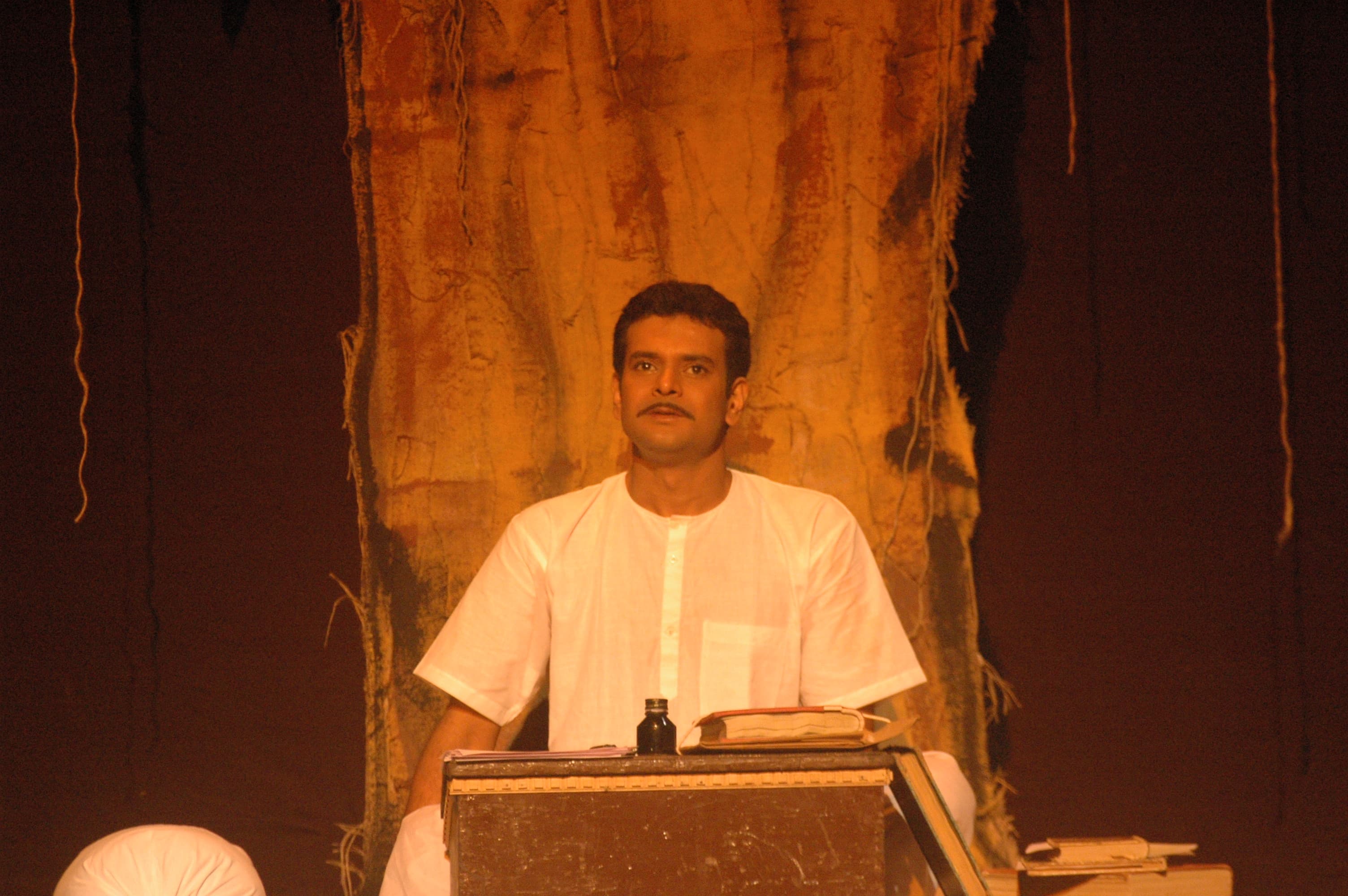
When Gandhi moved to South Africa and found himself in spiritual crisis, torn between Christianity, Islam, and his own Hindu inheritance, he wrote to Rajchandra posing twenty-seven questions about the nature of God, the soul, and the purpose of religion. Rajchandra’s replies — patient, precise, grounded in Jain philosophy but universal in their reach — resolved Gandhi’s doubts and set him on the path that would eventually lead to satyagraha. ‘In my moments of spiritual crisis,’ Gandhi wrote, ‘Shrimadji was my refuge.’
Rajchandra’s own masterwork was composed in a single sitting. In 1896, at the age of twenty-eight, he wrote the Atma Siddhi Shastra — 142 verses on the nature of the soul and its liberation — in approximately ninety minutes. The poem propounds six fundamental truths about the soul and lays out the path to self-realisation with a clarity that has given it near-canonical status among his followers. It is studied at universities for doctorates in philosophy. It has been translated into dozens of languages. It was written in an hour and a half by a man who would be dead within five years.
On 9 April 1901, Rajchandra died in Rajkot, surrounded by family and disciples. He was thirty-three years old. He left behind more than nine hundred letters charting his spiritual journey, philosophical poetry that remains a cornerstone of Gujarati literature, and an influence on Gandhi that the Mahatma acknowledged until his own death nearly half a century later.
Apurva Avsar — meaning ‘a rare occasion’ — premiered at Prithvi Theatre, Mumbai on 28 February 2007. Written by Raju Dave and Manoj Shah, the play does something ambitious even by Ideas Unlimited’s standards: it puts 2,500 years of Jain spiritual history on a single stage. Three actors — Dharmendra Gohil, Pratik Gandhi, and Pulkit Solanki — perform fifteen characters across three centuries, bringing together Acharya Hemchandra of the 11th century, Avdhut Anand Ghanji of the 17th century, and Rajchandra of the 19th, showing not an isolated life but a living tradition.
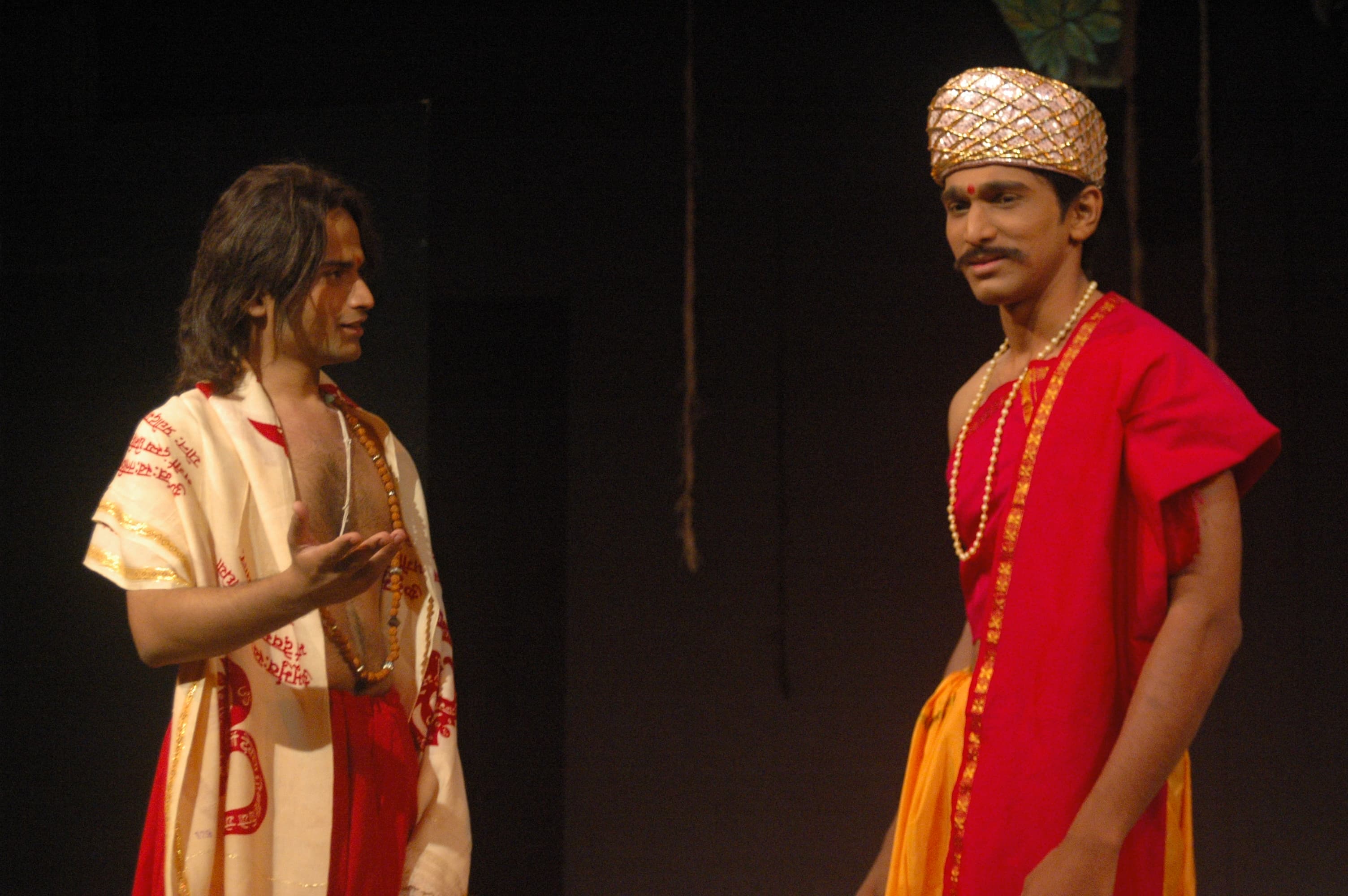
Dharmendra Gohil plays Rajchandra. It was a role that demanded something different from the dissolute poet he had already made his own in Mareez three years earlier. Where Mareez burned with excess, Rajchandra burned with restraint. Gohil had to embody a man whose simplicity was his most radical quality — a businessman walking the streets of Mumbai, looking like any other merchant, while carrying within him a spiritual intensity that would redirect the course of Indian independence. Deepa Punjani of Mumbai Theatre Guide called his performance ‘compelling.’ The India West review, covering the play’s US performances at the Jain Center of Southern California, praised all three actors for sustaining the two-and-a-half-hour narrative.
Pratik Gandhi — years before Scam 1992 would make him a household name — played multiple roles including figures from Rajchandra’s world of business and spiritual seeking. Pulkit Solanki completed the trio. Three actors, fifteen characters, and a set designed by Subhash Ashar that moved between the village of Vavaniya, the counting houses of Mumbai, and the inner landscape of a soul approaching liberation. Suresh Joshi’s musical score carried the weight of the spiritual passages.
Shah’s direction kept the play deliberately simple. ‘I have read a lot about him before conceiving this believable character,’ he told Jigna Padhiar of the Times of India. ‘Minute details like, what a businessman in Mumbai would have worn decades ago, or how he walked on the streets of Mumbai, have been looked into. Probably due to these nuances, the play is kept very simple. Through the play, I have tried to transport my audience to the past.’ The simplicity was a choice, not a limitation. Rajchandra’s life was not the stuff of theatrical spectacle. It was the stuff of quiet transformation.
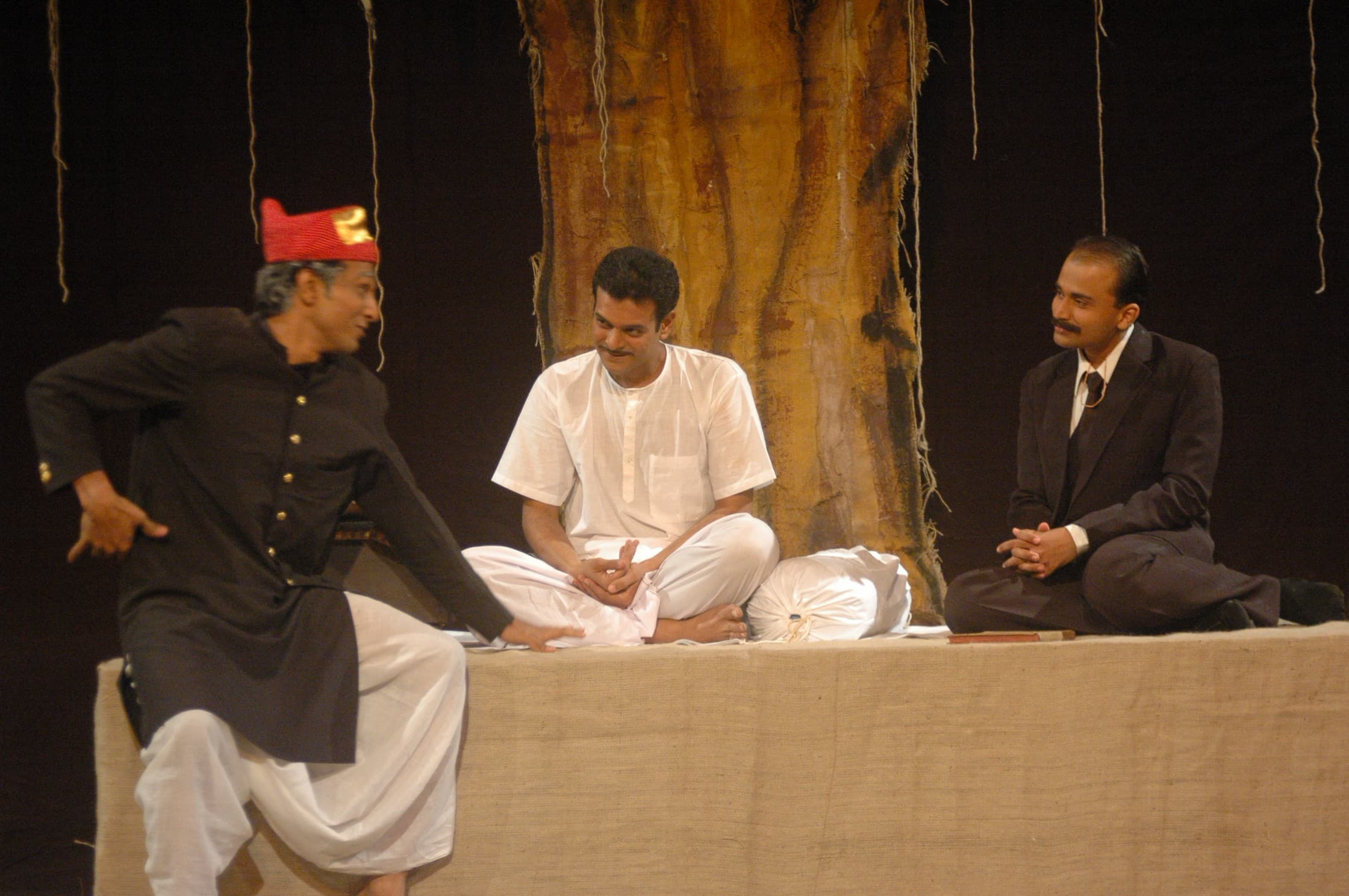
The play travelled. From Prithvi Theatre to NCPA. From Mumbai to Surat to Baroda. Then to the United States, where it was performed at the Jain Center of Southern California in July 2007. Archana Dongre, reviewing the US performance for India West, described how a full house sat through the intellectually challenging two-and-a-half-hour drama — evidence that the hunger for this story crossed oceans. A Hindi adaptation by Prayas Dave followed the same year, performed at the Mysore Association in Matunga, bringing Rajchandra’s story to audiences beyond the Gujarati-speaking world.
Apurva Avsar sits at a particular point in Ideas Unlimited’s trajectory. It was the company’s second major biographical production after Mareez in 2004, and it established what would become a defining pattern: using theatre to recover lives that the textbooks had reduced to footnotes. Rajchandra is revered by millions of Jains. His ashrams and missions span the globe. But for most Indians — including most of those who venerate Gandhi — he remains unknown. The play’s poster captured the paradox perfectly: ‘Hardly anyone knows him. Yet millions worship him.’
The productions that followed — Jal Jal Mare Patang on Manilal Dwivedi, Hu Chandrakant Bakshi, Bhamasha, Bhav Prapanch — each owed something to the template Apurva Avsar established: meticulous research, a subject drawn from Gujarat’s philosophical and literary heritage, and a refusal to simplify for the sake of entertainment. Shah has said that if the response warranted it, he would make more plays on Jainism. He kept that promise. Bhav Prapanch staged Siddharshi Gani’s 10th-century allegorical masterwork. Bhamasha told the story of the Jain warrior who funded Maharana Pratap’s resistance.
Rajchandra wrote nine hundred letters. He composed the Atma Siddhi in ninety minutes. He answered twenty-seven of the most searching spiritual questions ever put to him by the man who would become the Mahatma. He died at thirty-three with his work unfinished, his potential unmeasured, his influence still spreading. The play named after him — a rare occasion — asks its audience to sit with a life that was, by any measure, exactly that.
.JPG&w=3840&q=75)